
Written by Alexandra Blanck
Content Manager, Esko
Most Life Sciences teams are still solving the wrong problem when it comes to labeling and artwork.
They focus on catching errors at the end of the process, when the real issue is how those mistakes are created in the first place.
This gap is becoming harder to ignore.
Labeling and artwork errors remain one of the leading causes of pharmaceutical recalls. At the same time, organizations are under increasing pressure to move faster while maintaining strict control over compliance and patient safety.
In this environment, even small issues can put patient safety at risk, with significant operational and reputational consequences.
The challenge is no longer just getting labels right; it’s about proving they’re right. And it’s about doing so consistently, across every variation, market, and update.
The Real Problem: Workflows Weren’t Built for This
Most labeling and artwork workflows weren’t designed for this level of complexity.
In many organizations, critical information is still spread across disconnected systems, including spreadsheets, email threads, shared drives, and manual approval processes.
Verification often happens late in the process, just before production, when changes are more difficult and costly to make.
As Chris Janczar, Brand – Product Offering Manager at Esko, explains:
Most delays in packaging don’t come from a lack of tools—they come from disconnected steps that require the same work to be verified over and over again.
The issue is not that teams are not checking thoroughly enough. It is that the process itself creates too many opportunities for error.
Errors are caught too late. Rework cycles increase. Teams spend more time coordinating and double-checking than actually moving work forward.
As the volume of variations and regulatory requirements continues to grow, these disconnected workflows become a source of inefficiency and risk.
What’s Changing: Verification is Moving Upstream
To keep up, organizations are starting to rethink where and how control checks happen.
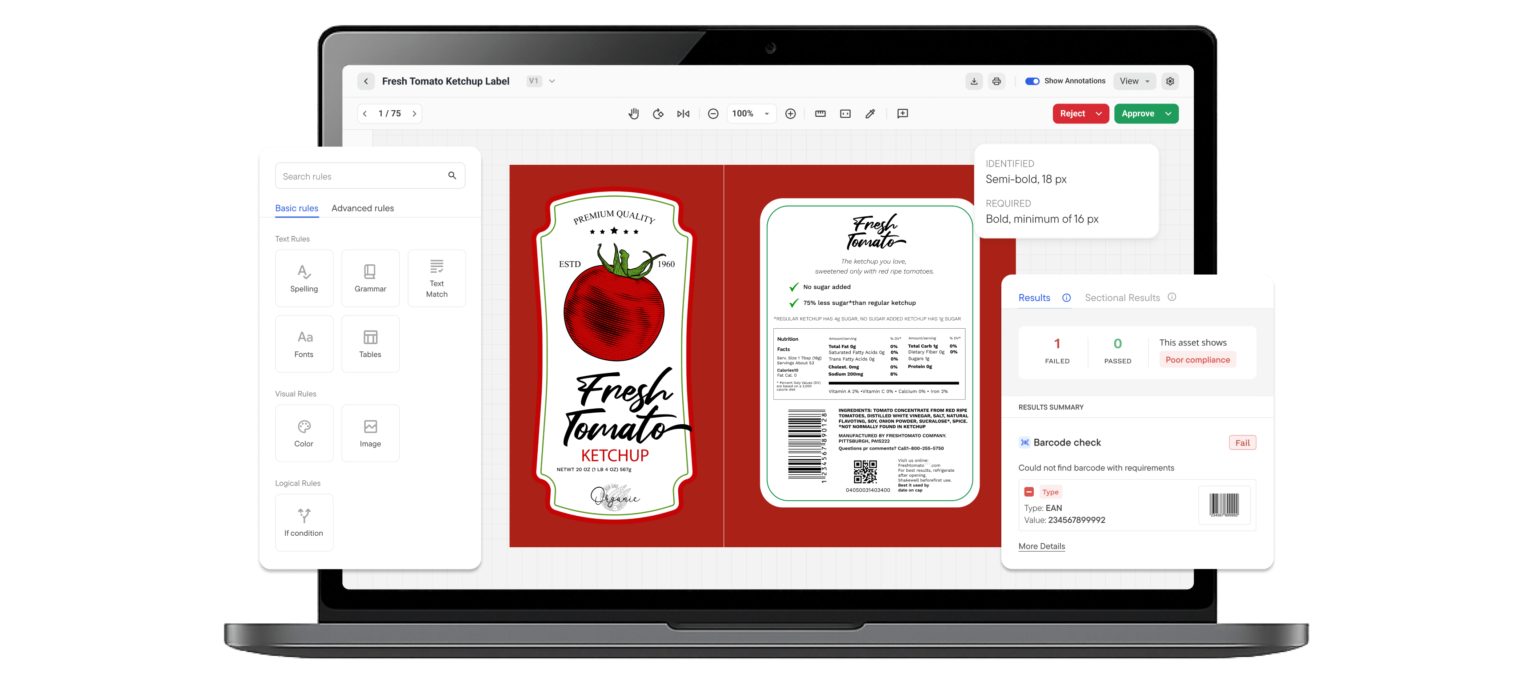
Instead of relying on final-stage checks, verification is becoming continuous and embedded directly into the workflow as artwork and labeling content is created and reviewed.
This shift allows issues to be identified earlier, when they are easier and less costly to fix. Teams no longer have to depend on last-minute reviews to catch critical mistakes.
Compliance becomes part of the process itself, rather than a final hurdle.
Compliance shouldn’t be a final gate—it should be something that’s evaluated continuously, every time content or artwork changes.
The Role of AI: From Checking to Assisting
AI is moving from a tool used at the end of the process to something embedded within it.
Automated quality checks can validate labeling and artwork content as it moves through the workflow, identifying inconsistencies, missing information, or potential compliance issues earlier and more consistently.
This reduces manual effort and helps ensure issues are addressed before they lead to rework.
At the same time, a new layer of capability is emerging through what is often referred to as Agentic AI.
Rather than only checking completed work, these systems support teams during the creation process. They flag potential issues in context, guide decisions, and help ensure that artwork is as accurate as possible from the start.
The goal is to improve accuracy and support better decision-making in increasingly complex regulatory environments.
Why This Only Works with Connected Data
Of course, AI and embedded control checks don’t operate in isolation.
For these capabilities to deliver real value, they rely on structured, connected data across the entire artwork and labeling process.
That means bringing together artwork files, labeling content, approvals, and workflows into a unified environment, rather than managing them across disconnected systems.
When data is connected, teams gain better visibility into what’s happening, where risks exist, and how changes impact different variations.
It also improves traceability, which makes it easier to understand who made changes, when they were made, and how decisions were validated along the way.
Without that foundation, even the most advanced tools struggle to deliver consistent results.
The Shift: From Reactive to Proactive
Taken together, these changes represent a broader shift in how labeling and artwork are managed.
Instead of reacting to mistakes after they occur, teams are moving toward preventing them earlier in the process.
Speed to market improves when teams spend less time rechecking and more time moving forward with confidence.
Instead of relying on manual checks and fragmented systems, they are embedding quality directly into workflows.
And instead of working in silos, they are connecting data, teams, and processes into a more unified approach.
This is not solely about efficiency. It’s about reducing risk, improving confidence in compliance, and enabling teams to move faster without losing control.
What This Means for Life Sciences Teams
For Life Sciences organizations, the impact is significant.
Teams that adopt more connected, data-centric workflows supported by AI can reduce rework, accelerate approvals, and improve overall consistency across labeling and artwork.
They also gain greater confidence in their processes, knowing that control checks are happening continuously, not just at the final stage.
In an environment where the cost of error is high, that level of control and visibility becomes a competitive advantage.
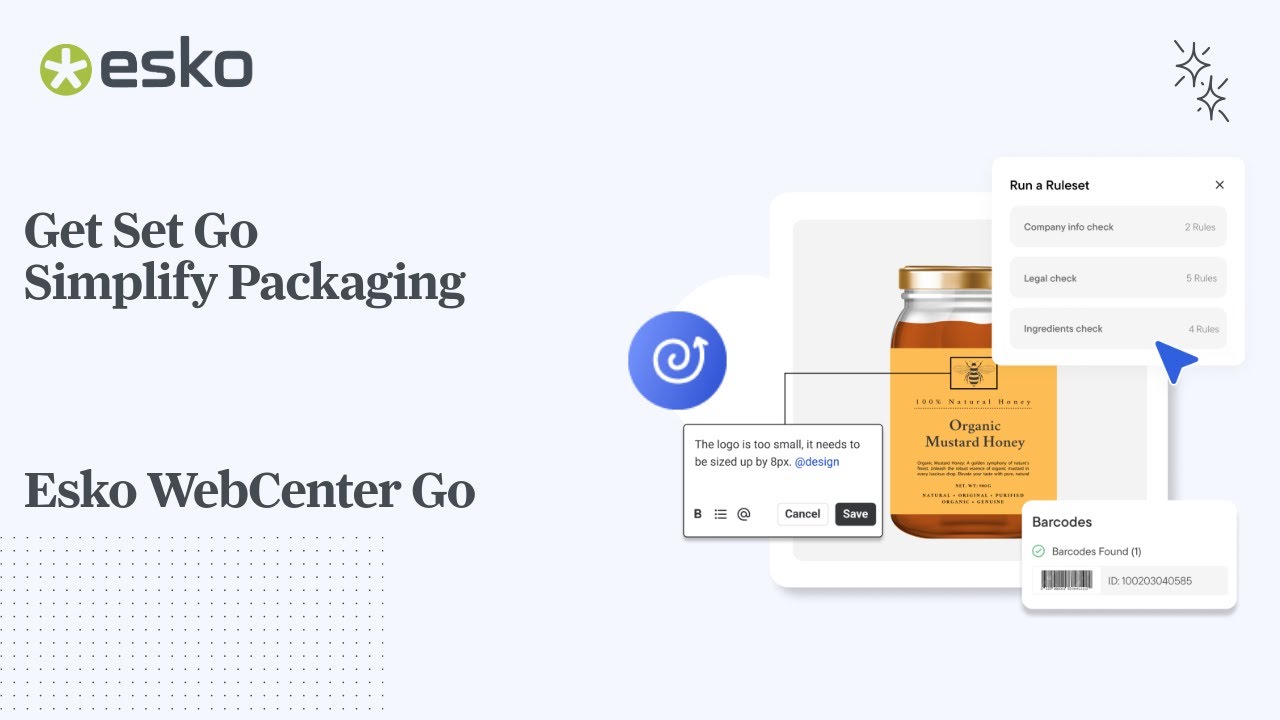
For some organizations, this starts with more structured, accessible solutions that bring order to workflows, approvals, and version control.
For others, it extends to more advanced platforms that support global scale, deeper integration, and complex regulatory environments.
In our upcoming webinar, we’ll walk through how teams are putting this into practice and embedding quality directly into their workflows.